Forest School & Climate Action Plan
Forest School
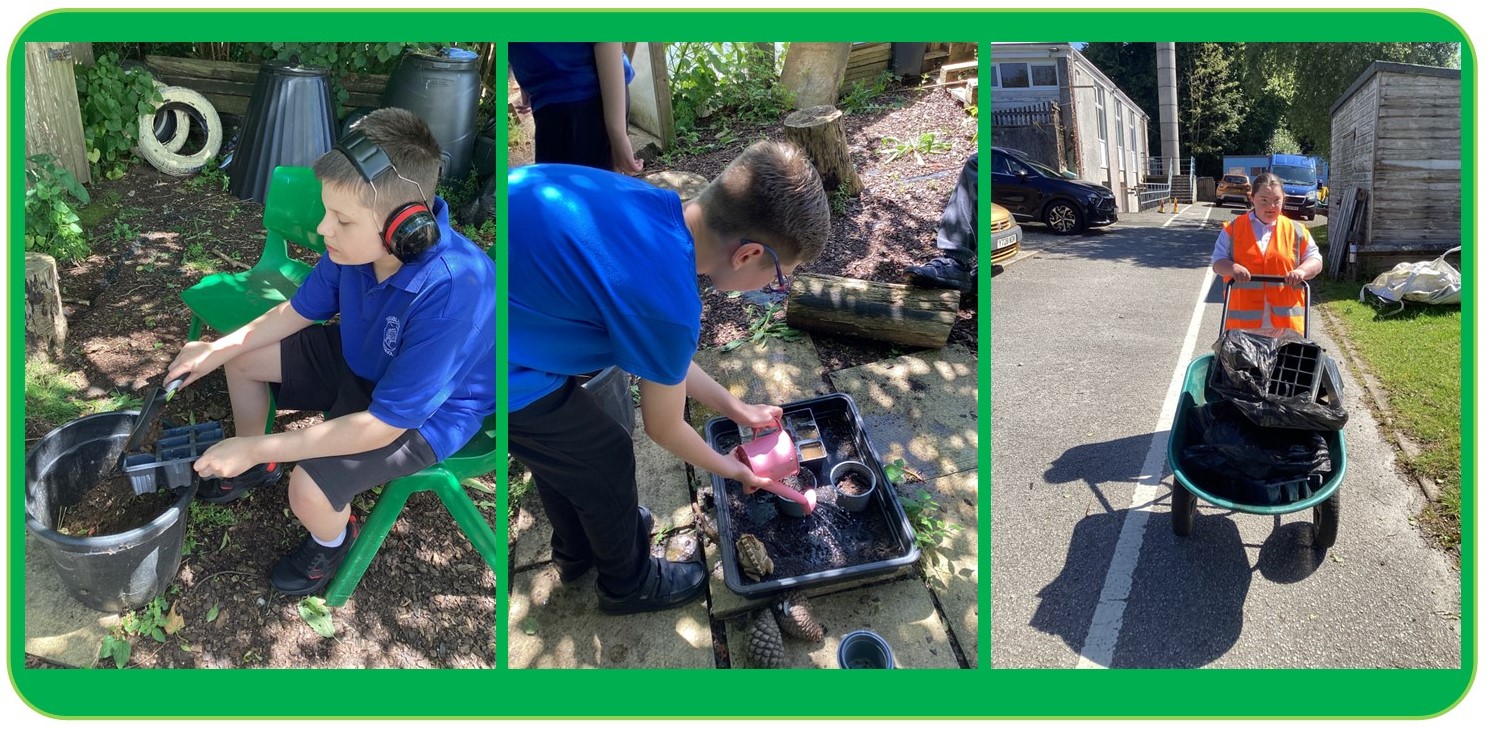
Forest School is a child-centred inspirational learning process that offers opportunities for holistic growth through regular sessions. It is a long-term program that supports play, exploration and supported risk-taking. It develops confidence and self-esteem through learner-inspired, hands-on experiences in a natural setting.
Forest School has a developmental ethos shared by thousands of trained practitioners around the world, who are constantly developing their learning styles and skills to support new and imaginative learners. It's roots reach back to the open-air culture, friluftsliv (a simple life in nature without destroying it or disturbing it), or free air life, seen as a way of life in Scandinavia where Forest School began. It arrived in the UK in 1993 and has grown from strength to strength since then.
The process helps and facilitates more than knowledge-gathering, it helps learners develop socially, emotionally, spiritually, physically and intellectually. It creates a safe, non-judgemental, nurturing environment for learners to try new experiences. Forest School inspires a deep and meaningful connection to the world and an understanding of how a learner fits within it. Forest School helps participants to become healthy, resilient, creative and independent learners.
There is lots of research out there to support the outcomes of Forest School, but we know that it isn’t just the educational outcomes and research that matter, our learners and leaders love it too!
Climate Action Plan
A clear, credible climate action plan is now essential for schools responding to the Department for Education’s Sustainability and Climate Change Strategy.
A well-structured school climate action plan helps leaders move from ambition to action, aligning environmental responsibility with educational outcomes, operational resilience and long-term cost control.
A strong climate action plan for schools goes beyond carbon reporting and sets out a system for schools and trusts to respond to, and implement, a plan aligned with the DfE Sustainability Strategy, which is based on four pillars: decarbonisation, biodiversity, green skills and curriculum, and adaptation. It sets priorities, defines responsibilities, and creates measurable progress that can be communicated with confidence to governors, staff, pupils, and parents.
The educational climate action plan for schools is a comprehensive strategy that outlines how educational settings will implement sustainability initiatives. Key components include:
A climate action plan for schools provides more than compliance with government guidance. It offers a structured way to reduce costs, manage risk and improve learning environments. Rising energy prices, extreme weather and changing regulations all have direct impacts on schools. Planning ahead helps mitigate these pressures.
A climate action plan also strengthens governance and accountability. It gives leadership teams a clear narrative for governors, parents and inspectors. Schools with a documented plan are better placed to demonstrate responsible stewardship of public funds and assets. Beyond operations, a climate action plan supports pupil wellbeing and engagement by showing how sustainability values are translated into action across the school community.
To view our climate action plan, please download the document below.